BioChromes
For this week’s lesson, we’ll be exploring the colors we can obtain from natural resources.
Research
The first very clear reference that comes to my mind is the Paracas culture, a culture that developed in Peru and is particularly well known for the high level of craftsmanship they achieved in textiles, especially in terms of their quality and the range of colors they used.
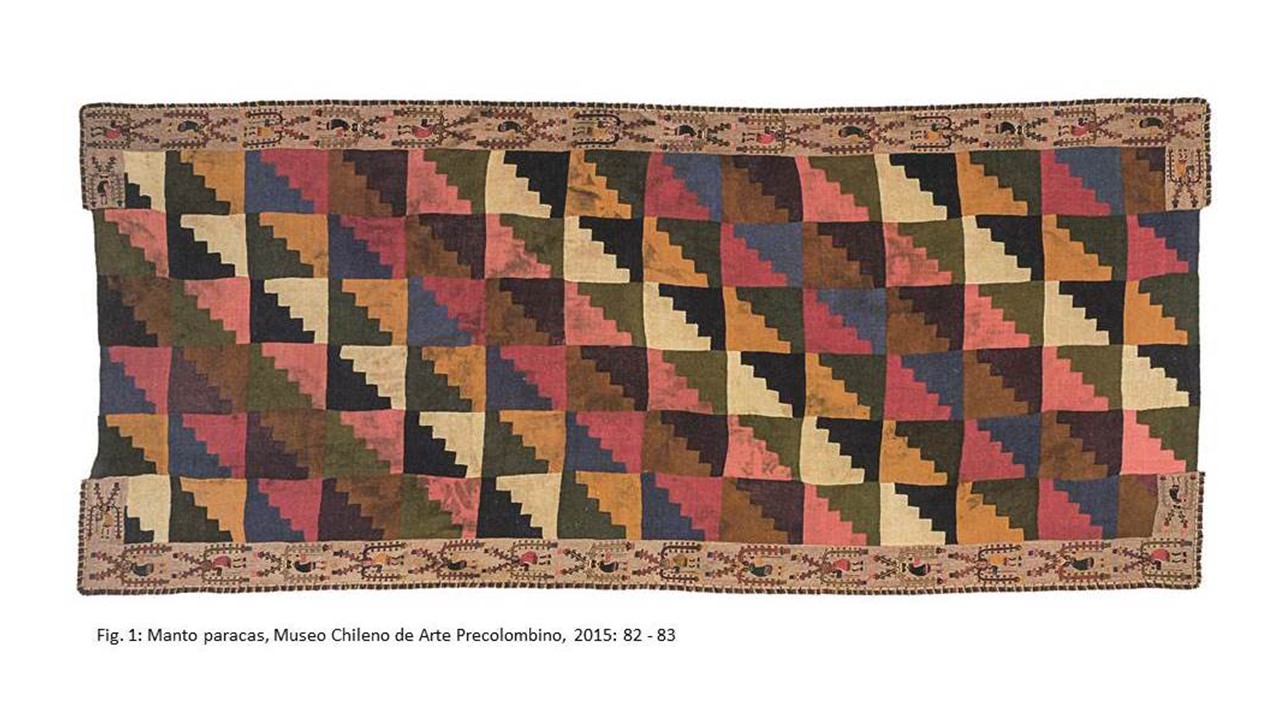
As we can see in the images I selected, there is a very wide variety of tones. This is because they developed the practice of dyeing textiles using the different natural elements they had available in their surroundings.
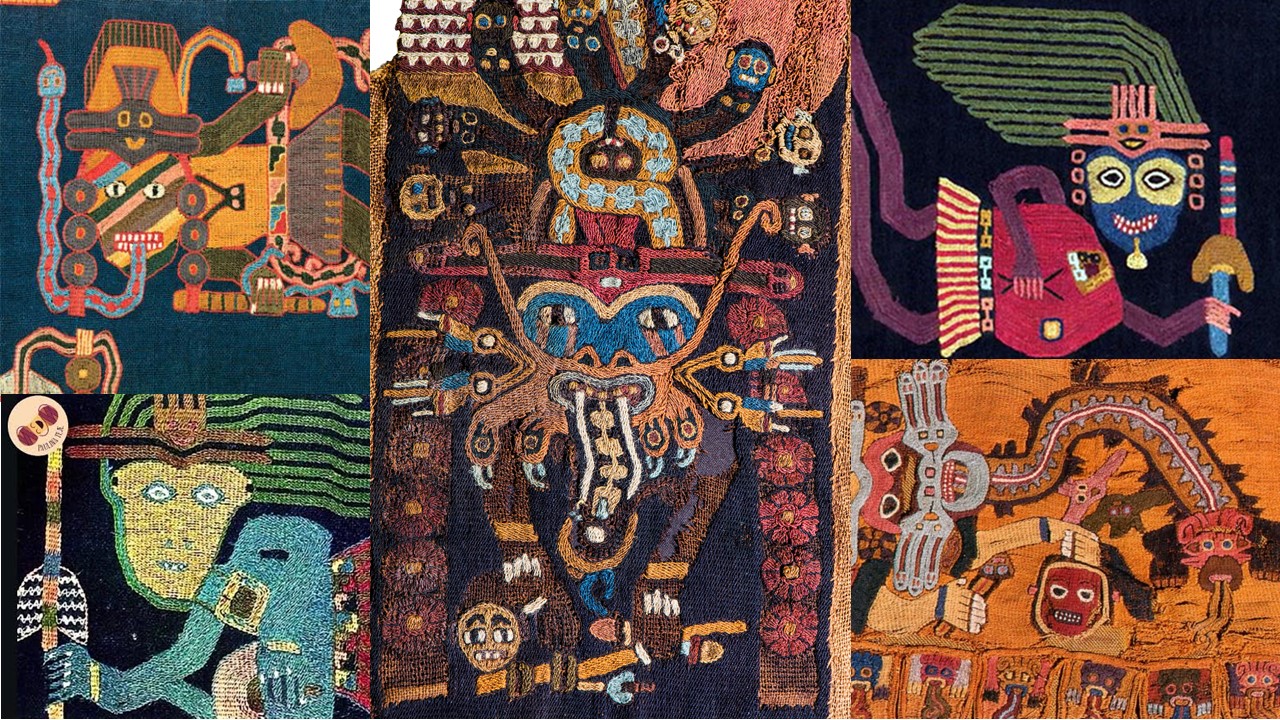
This textile tradition of working with color is thousands of years old and is still practiced today in different communities, such as the community of Chinchero in Cusco, in the Andes.
This also shows how widespread this tradition is. Peru has three main geographical regions: the coast, the highlands, and the rainforest, and each one has different dyeing practices that vary depending on the materials available. Today, some of the most representative practices come from the highlands and the rainforest.
People use plants that are readily available in their surroundings, and many of these plants also have medicinal properties. Aluminum-based mordants are commonly used, along with different modifiers to create variations in color.
The range of tones is therefore also quite characteristic of each region. In fact, it is often said that depending on the region you come from, certain colors are more representative than others. Even textiles can sometimes tell us where someone comes from or which community they belong to.
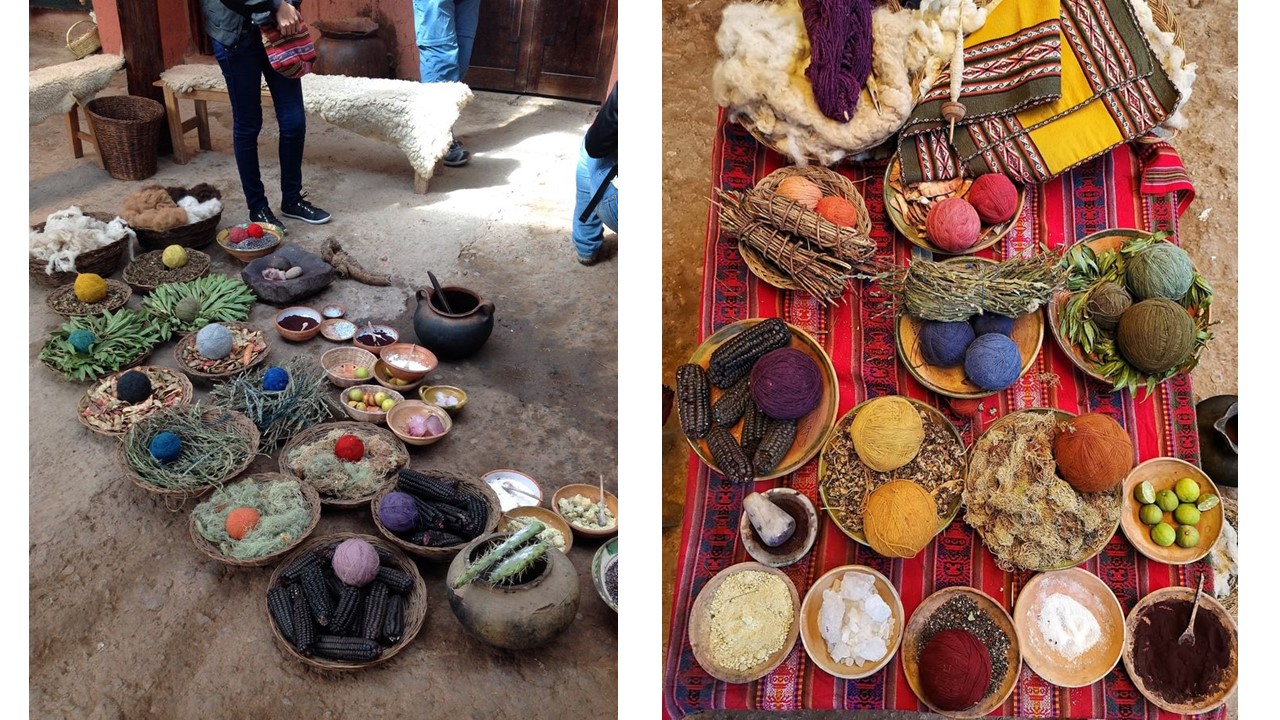
So, this is a practice that is still very much alive today, and I found it interesting to explore this topic because it connects me with an important part of my country’s history.
Reference
For my references, I did some research and was also trying to remember how I had encountered this topic before.
First, I came across this brand, which I found very interesting. It’s called Gena Grima. It’s a brand that sells naturally dyed pieces and also offers workshops. It’s based in Jaipur. I found it really interesting how they promote the recovery and reuse of certain waste materials, how they incorporate them into their garments, and also how they connect consumers with the dyeing practices used in that country
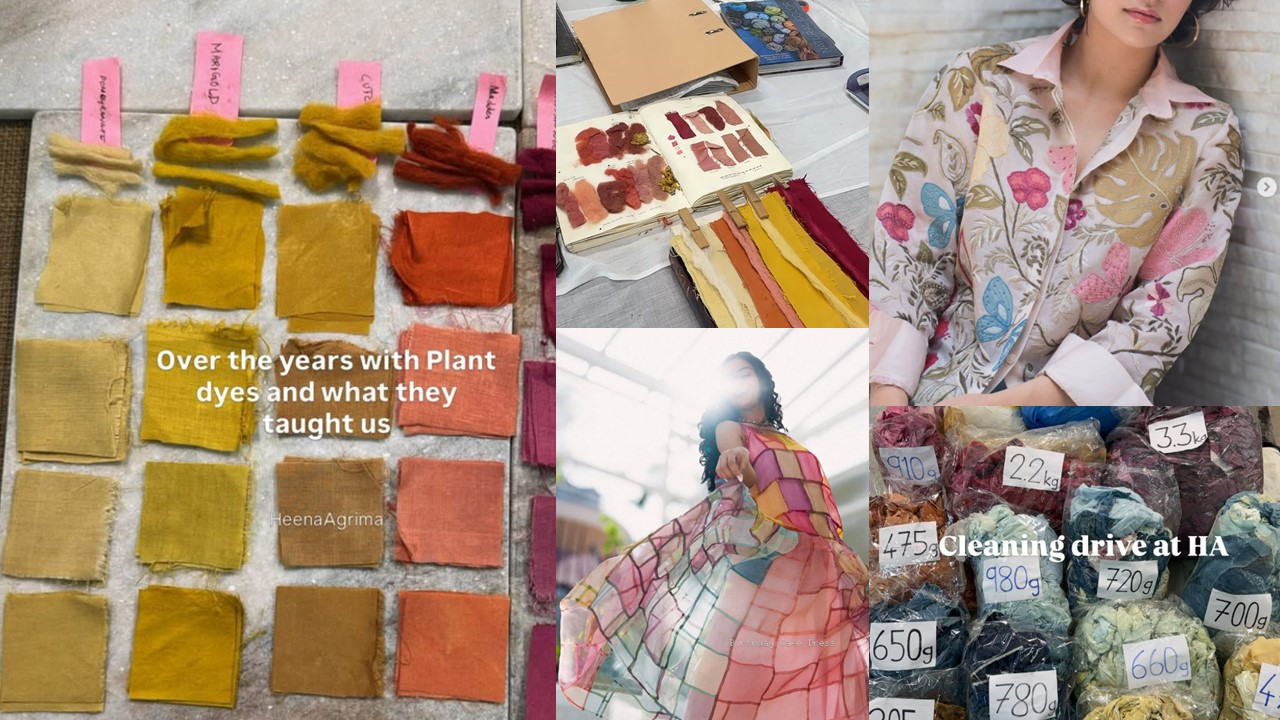
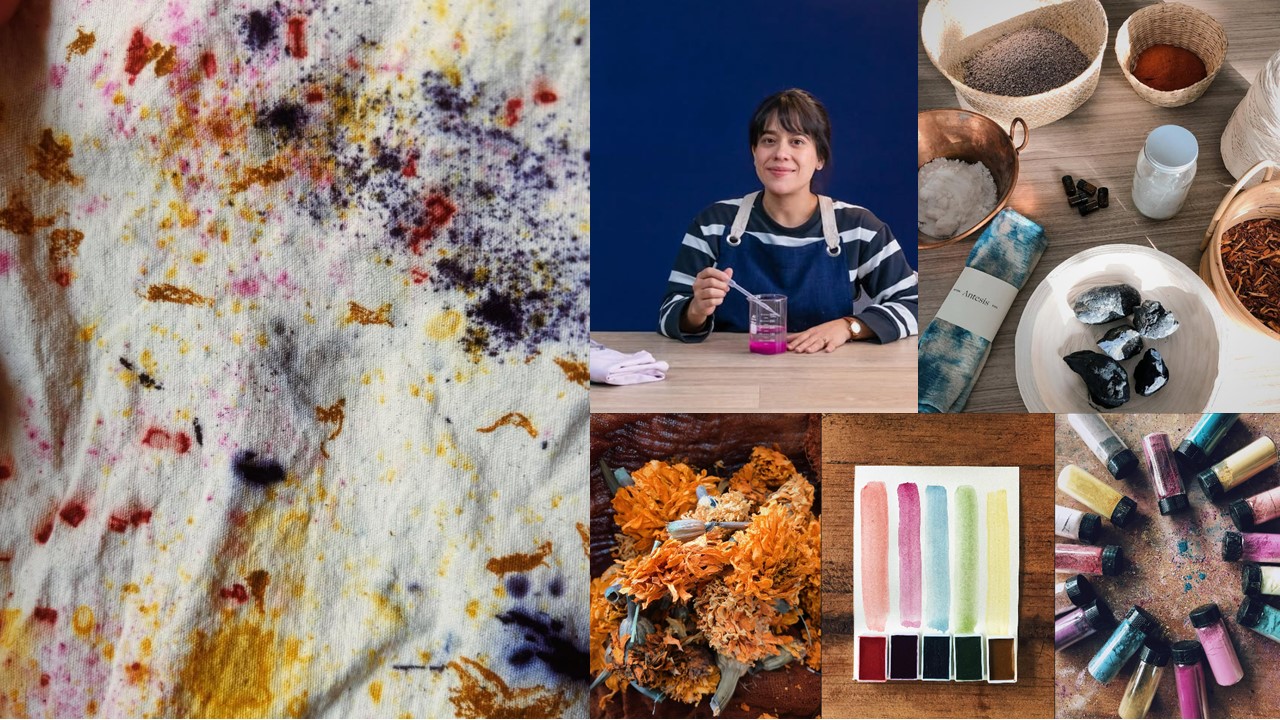
Another one of my references is Antesis. It’s more like a dyeing studio, run by Anabel Torres. She is Mexican, and Mexico, like Peru, also has a long textile tradition. I remember taking some of the courses she taught on natural dyeing, different plants, and modifiers. It was really enriching to see the different approaches and variations that could be achieved through pigment extraction.
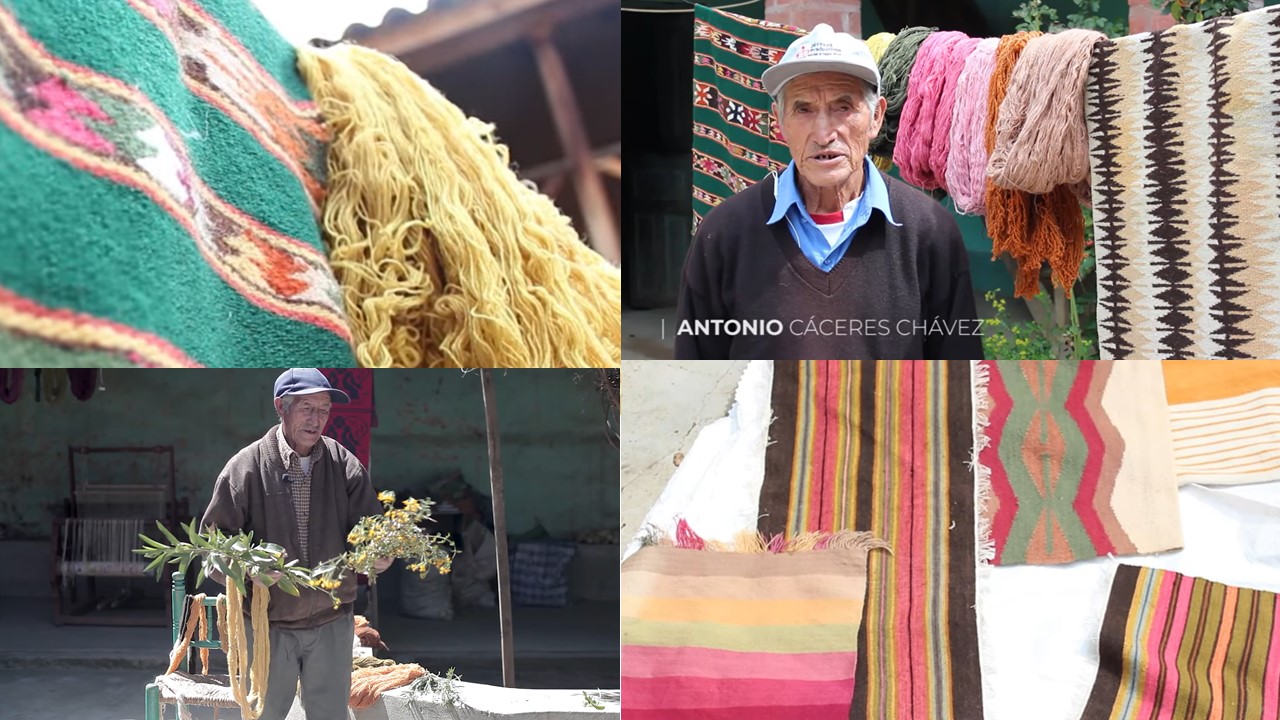
My last reference is a craftsman from my area, from the town of Hualhuas, in Huancayo. He has been working with textiles and natural dyes for about 50 years. I’ve had the opportunity to visit his workshop, where he has dedicated his work to researching and exploring different types of plants that he can find in the hills and in his own fields, and uses them to create a wide variety of dyes.
What I find particularly interesting is that the plants he works with allow him to achieve very distinctive colors, which he then uses in his textiles. Because of this, his work has also become quite recognizable.
Inspiration
As a general source of inspiration, at least here in Peru, there is quite a lot of documentation on the different types of plants and natural materials that can be used for dyeing.
For example, I found this reference book called Peruvian Dye Plants, which includes different recipes as well as a collection of plants used for natural dyeing.
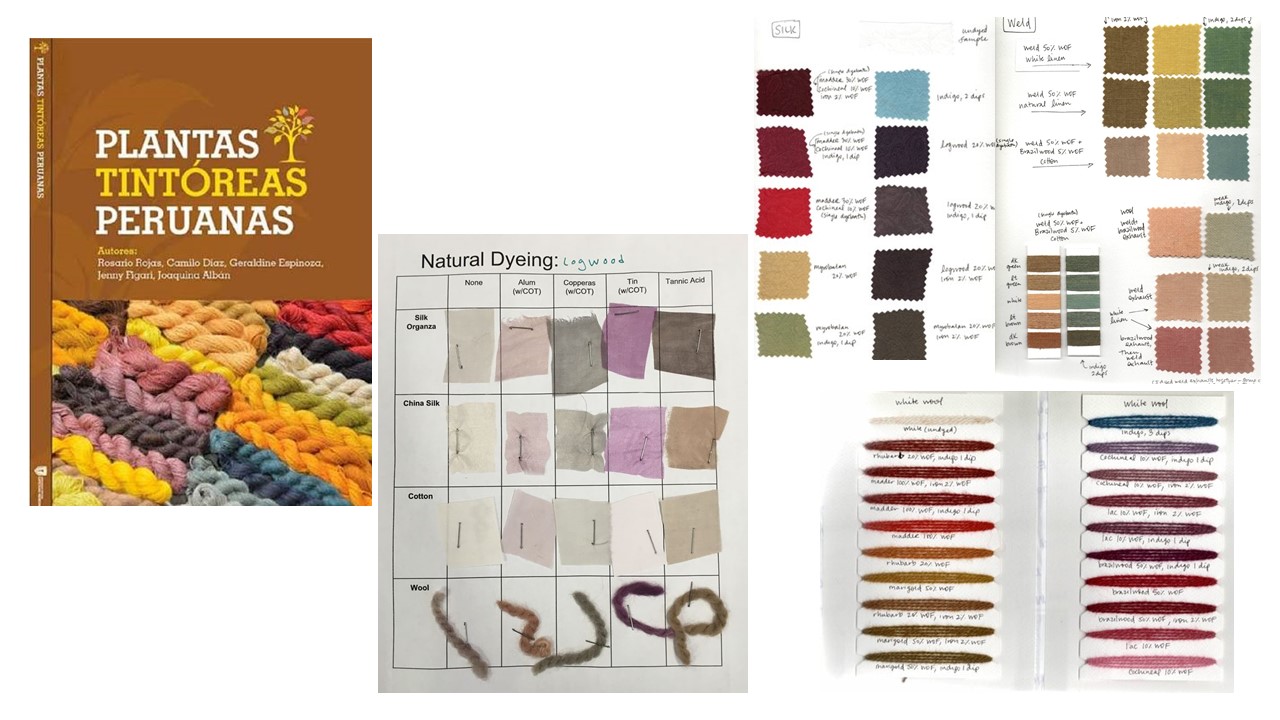
I also came across these fabric and wool color charts, which show the different results almost like a sample library. I found these on Pinterest, and I’ve included the reference below.
I found the way they are presented particularly illustrative and well organized, because there are so many variables involved in the dyeing process, and each element can modify the final result.
Process and workflow
Tools & materials
- Fabrics & Fibers
- Dye sources
- Mordants
- Water
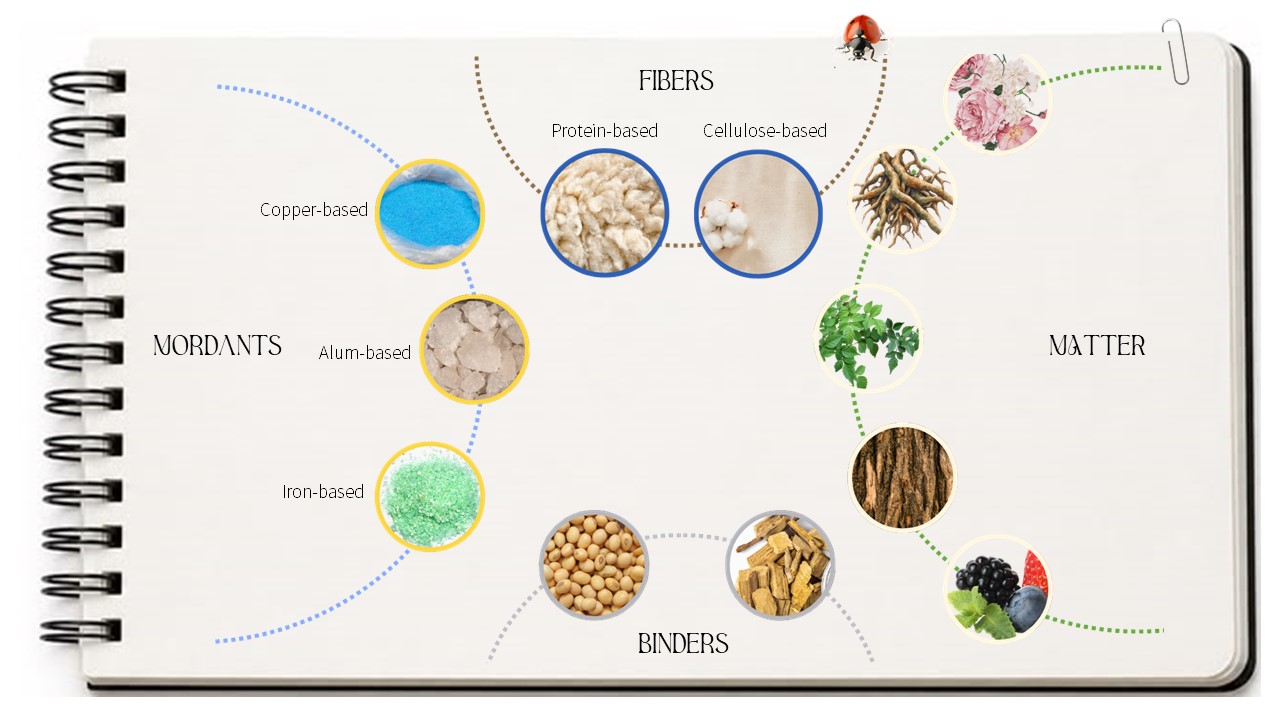
Regarding the process, the materials we used included different fabrics and fibers, such as wool, with both protein-based and cellulose-based fibers. We mainly worked with cellulose-based fibers.
In this case, we used silk, silk wool, a blend of bamboo and merino wool, linen, tocuyo, and a type of cotton fabric called yupur. For the tocuyo, we used both a thick and a thin version.
In addition to that, we used different natural dye sources, mainly leaves and fruits.
It is also important to keep in mind that we need a certain level of precision if we want to be able to reproduce the process. So, we need to accurately weigh the fibers and keep track of the time and temperature throughout the process.
Mordant concentration
According to the theory covered in class, we used the following mordant concentrations based on the weight of the fiber (WOF): - 15% potassium alum - 4% ferrous sulfate - 4% copper sulfate
Prepare de samples
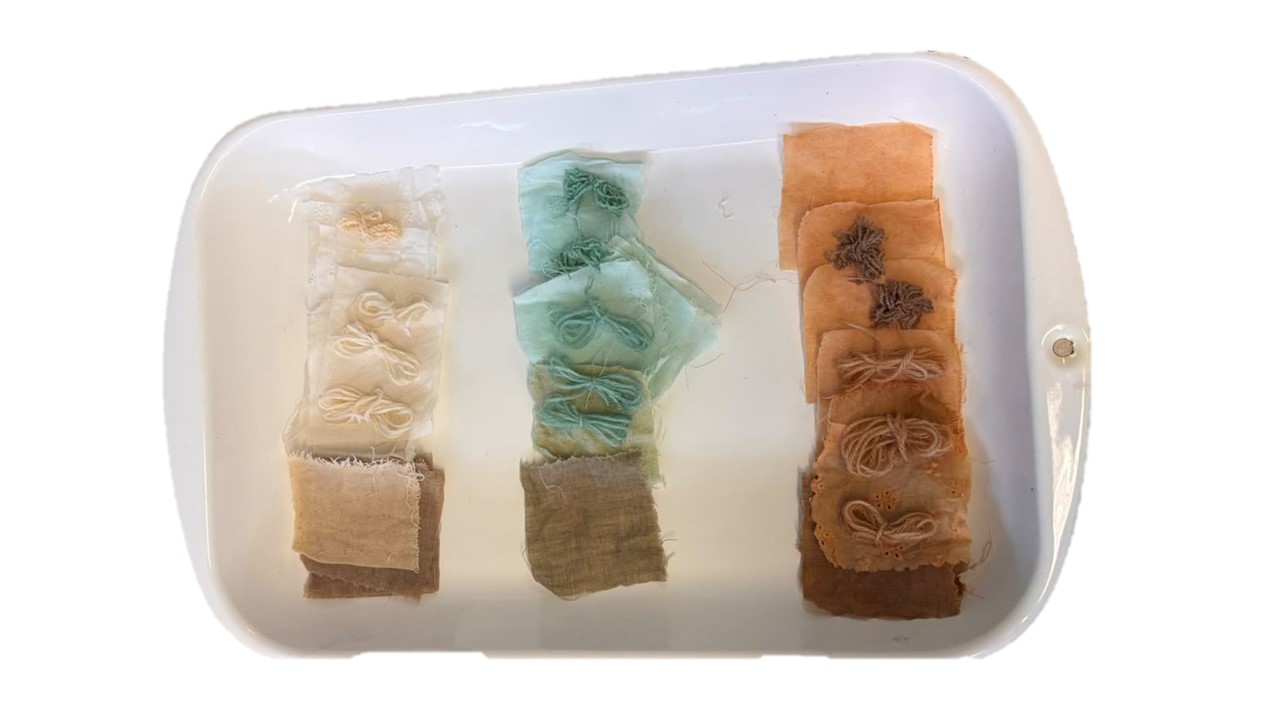
In this case, we cut some fabric into small squares, and for the fibers, we made small skeins using a representative amount.
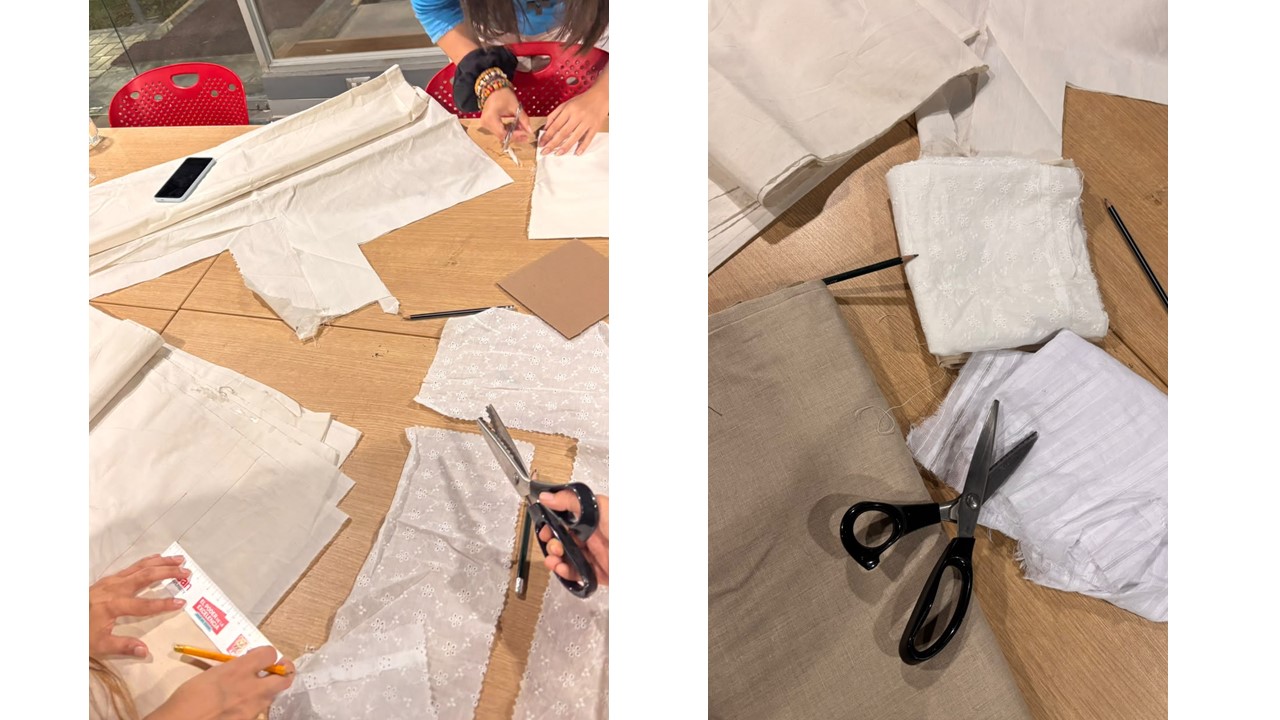
After that, we washed the fibers to make sure they were clean and free of any dirt or other elements that could interfere with the dyeing process. Then, we weighed the fibers while they were still wet.
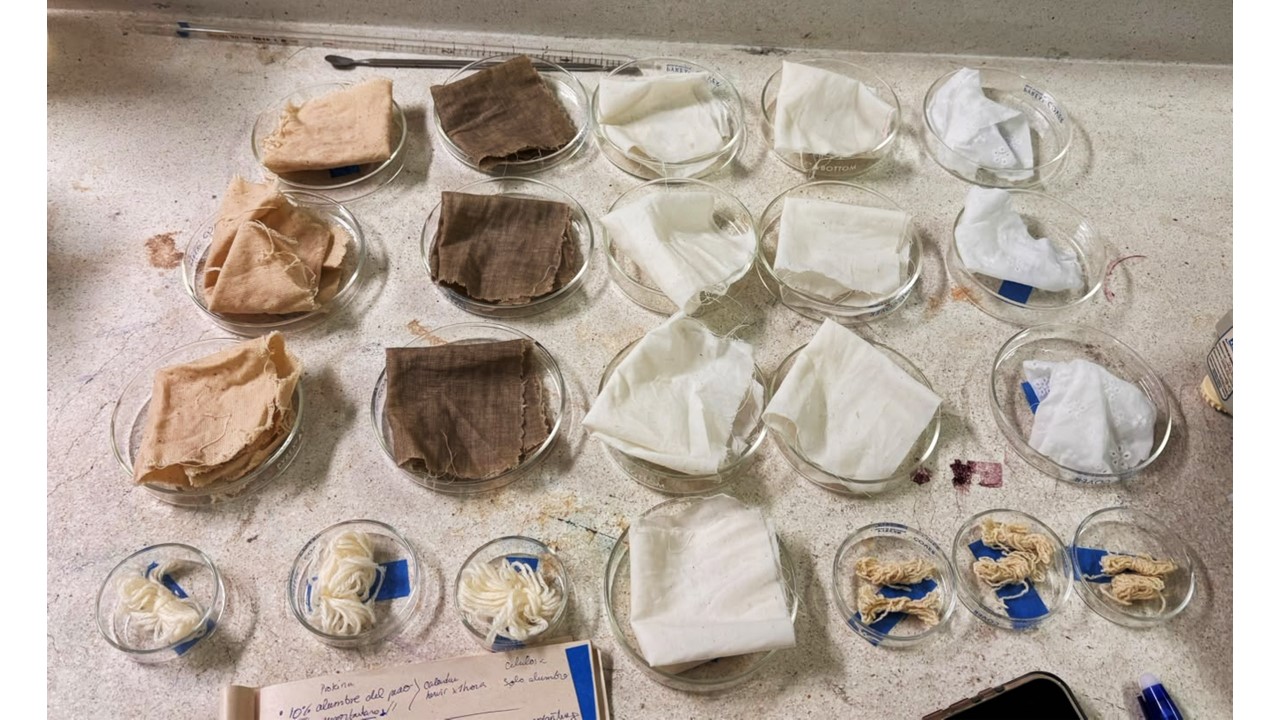
We used three mordants: potassium alum, copper sulfate, and ferrous sulfate. Once the samples were ready, we weighed them, calculated the amount of mordant needed, and prepared each mordant separately in different containers.
| Group | Mordant | WOF (g) | Mordant percentage | Mordant amount (g) |
|---|---|---|---|---|
| Group 1 | Potassium alum | 43.8 | 15% | 6.57 |
| Group 2 | Ferrous sulfate | 43.8 | 4% | 1.75 |
| Group 3 | Copper sulfate | 43.8 | 4% | 1.75 |
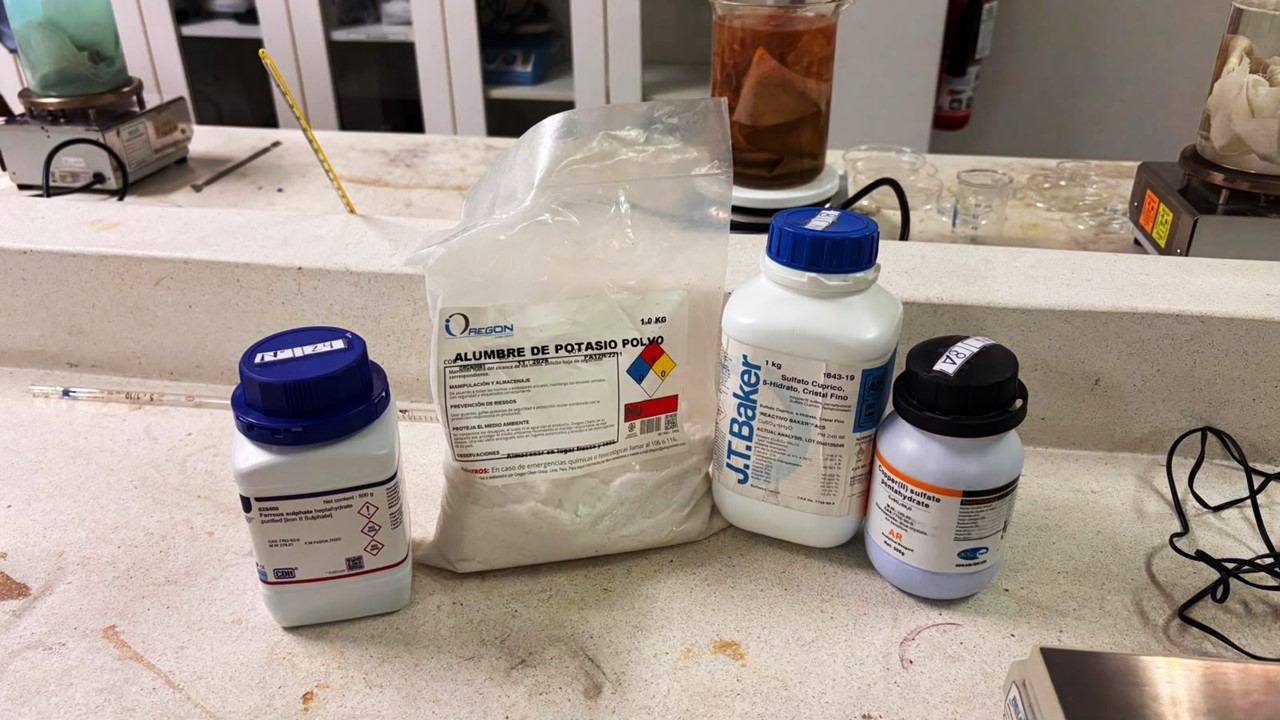
We first added the water and then added the required amount of mordant. We mixed everything thoroughly and then immersed the fabrics in the bath.
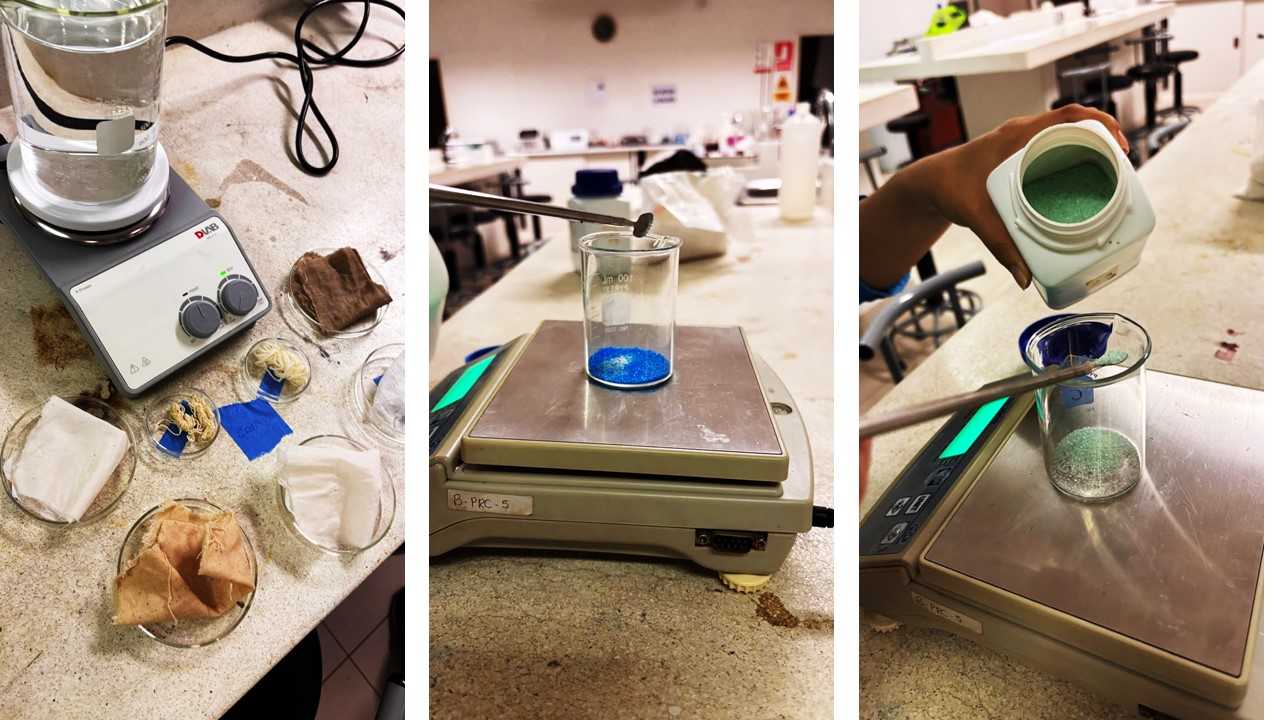
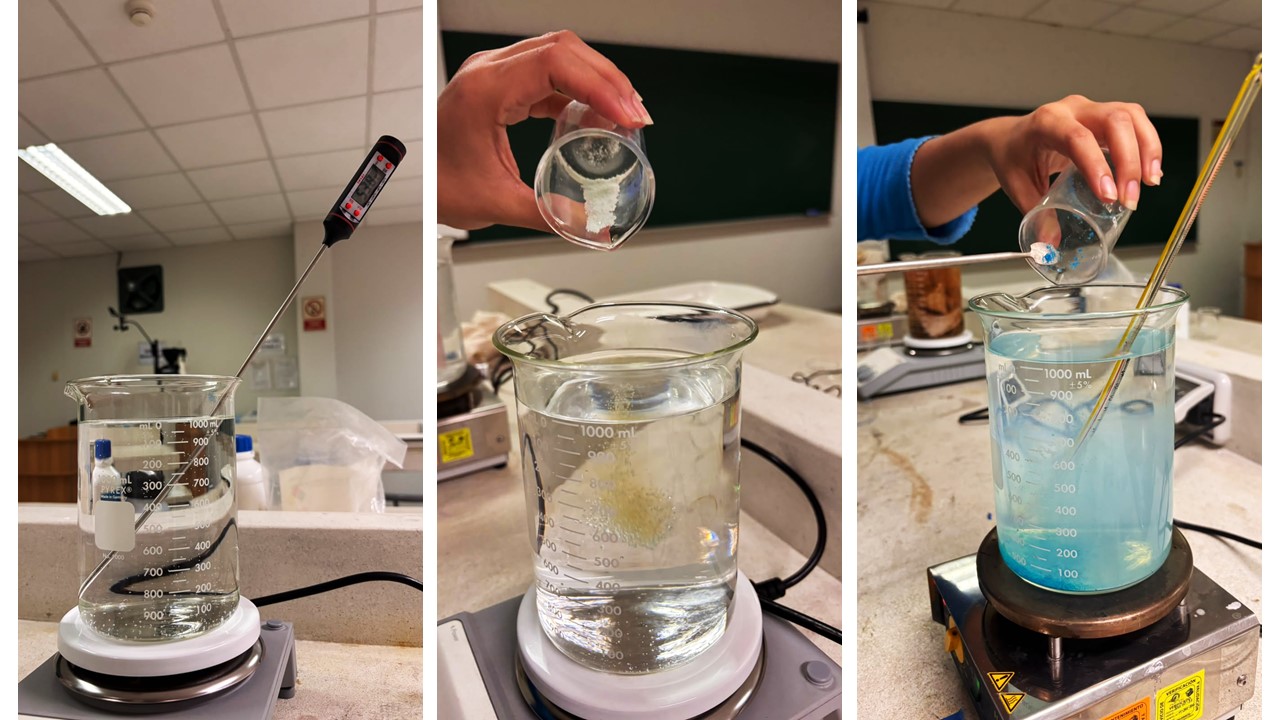
They were left in the mordant bath for approximately one hour. After that, we allowed them to cool in the same container and left them there until the following day, when we drained the remaining water.
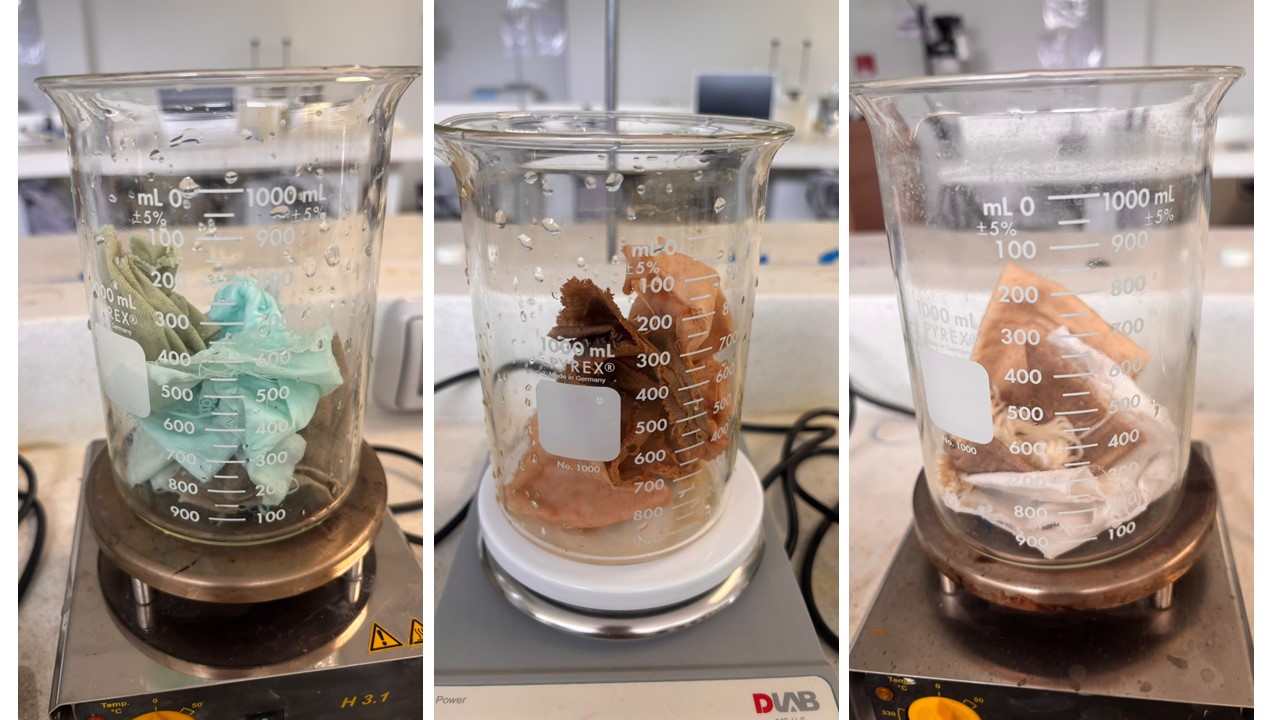
Dye bath
For the dye sources, we used red cabbage, purple corn, cochineal, blueberries, and a local fruit called airampo. We also experimented with bougainvillea, molle, and eucalyptus. For the experiment, 100% of the fiber weight was used.
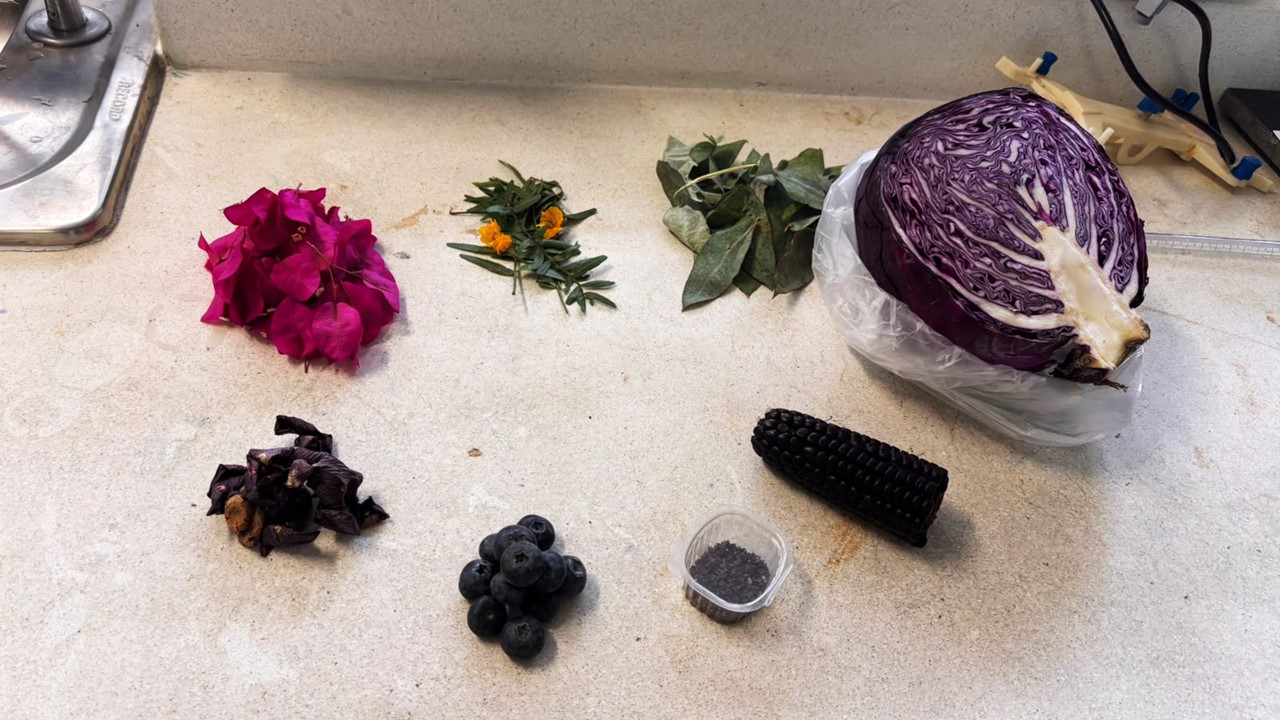
Each of these materials was placed in a container with water to extract the dye and create the dye bath. Once the water reached a point just before boiling, we added the fabrics.
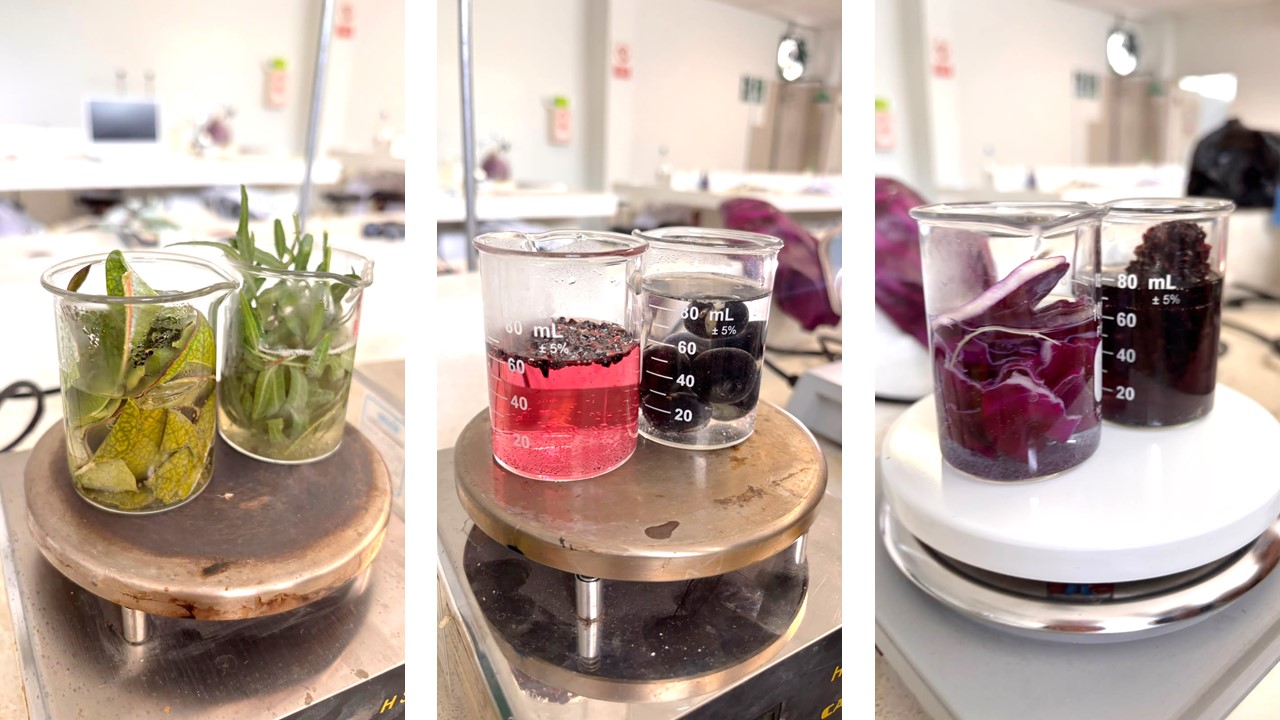
For this first stage, it is important to clarify that we prepared only one container for each dye source. So, in each container, we placed three fabric samples, each treated with a different mordant.
There was, of course, a risk that the different mordants could affect the dye bath or the final result. And they actually did produce different shades of color.
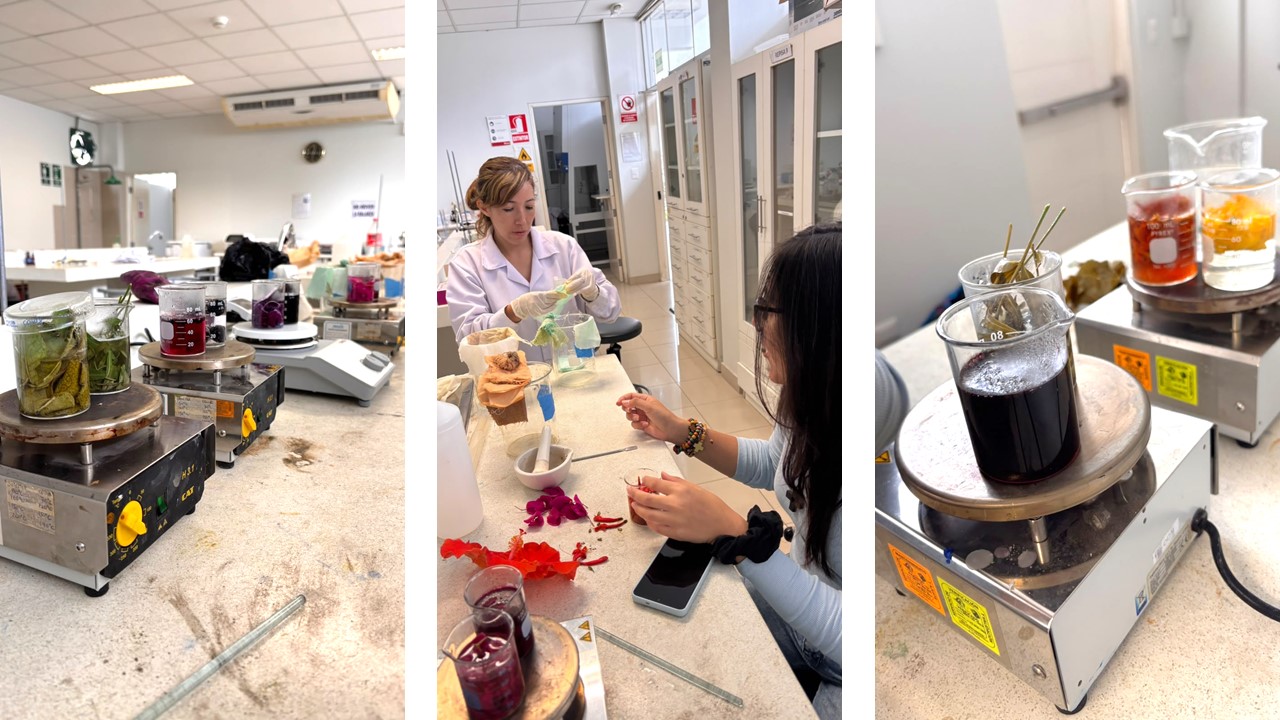
For example, there were some plants where we had no idea what color they were going to produce, so it was really interesting to discover the results. Some of them produced salmon tones, while others resulted in more bluish or purple shades.
Eucalyptus, for example, resulted mostly in brown tones.
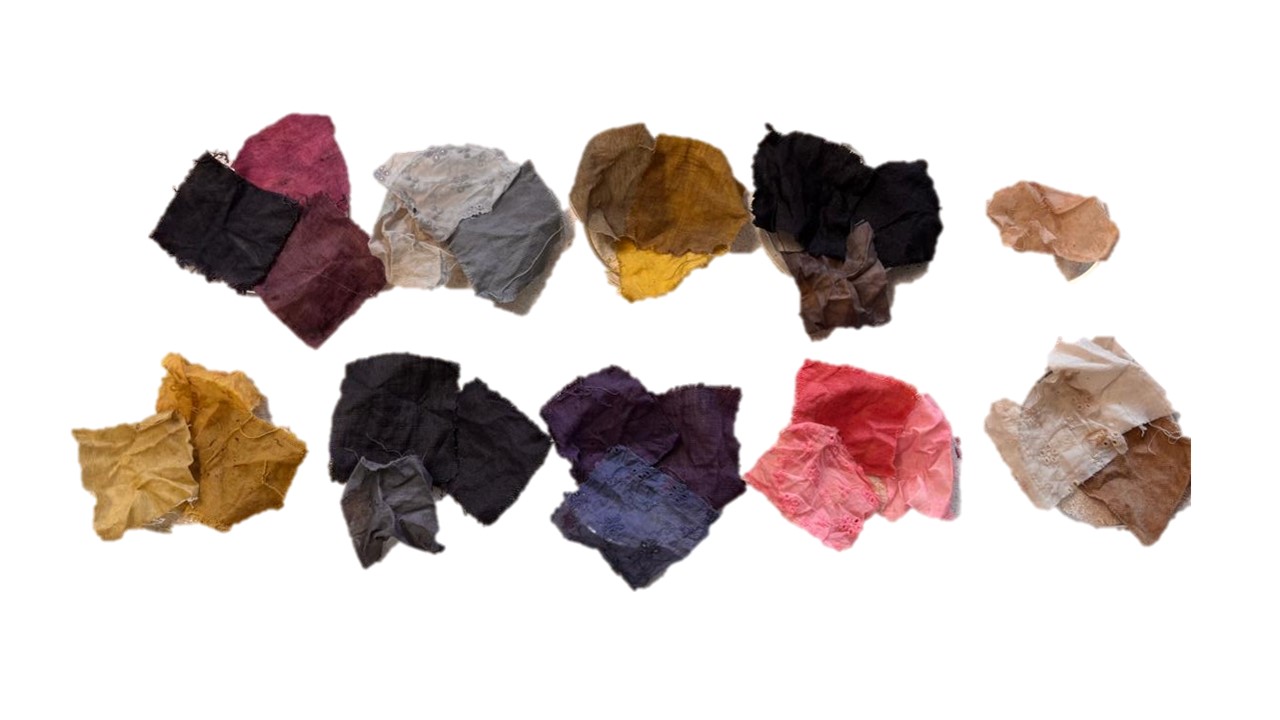
Based on these results, we decided to carry out a second dyeing process.
Second attempt
For the second dyeing process, we used our mordanted fibers and fabrics, which had already been sorted and prepared. This time, we prepared three separate dye baths for each mordant.
So, we prepared three eucalyptus baths, three airampo baths, three purple corn baths, three red cabbage baths, and three cochineal baths. We also included a new plant, honeysuckle, using its flowers, as well as blueberries.
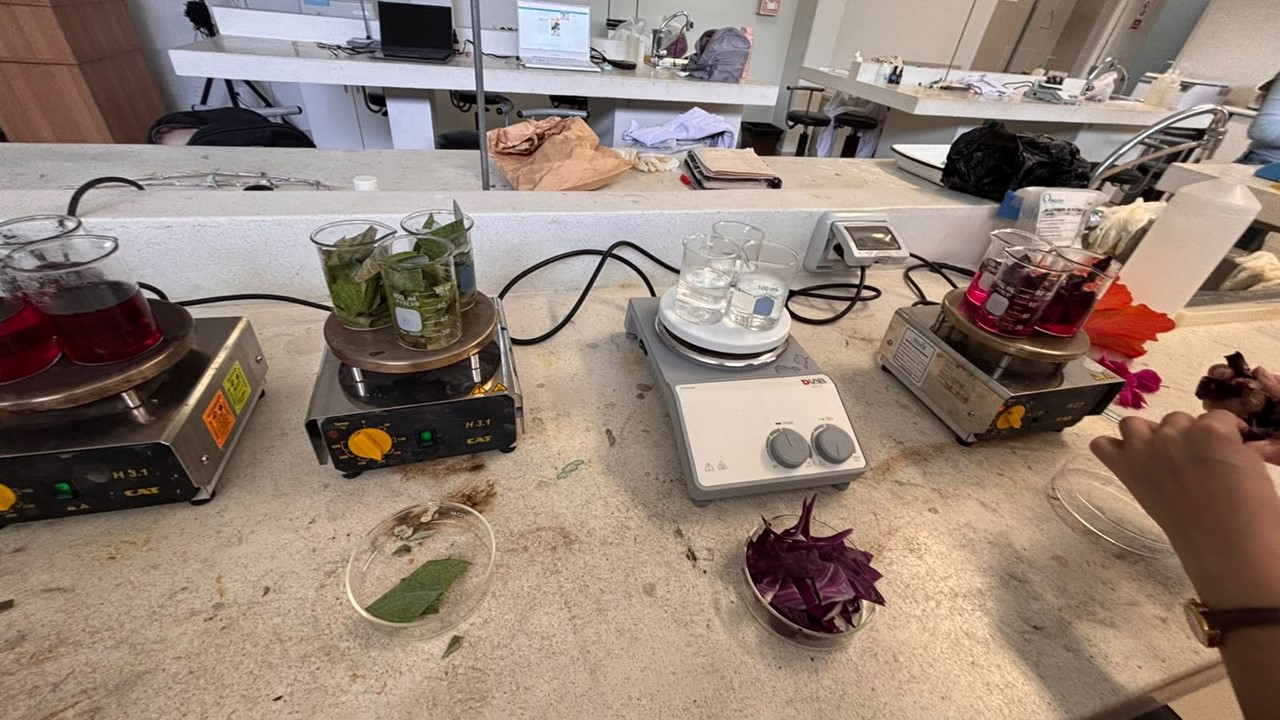
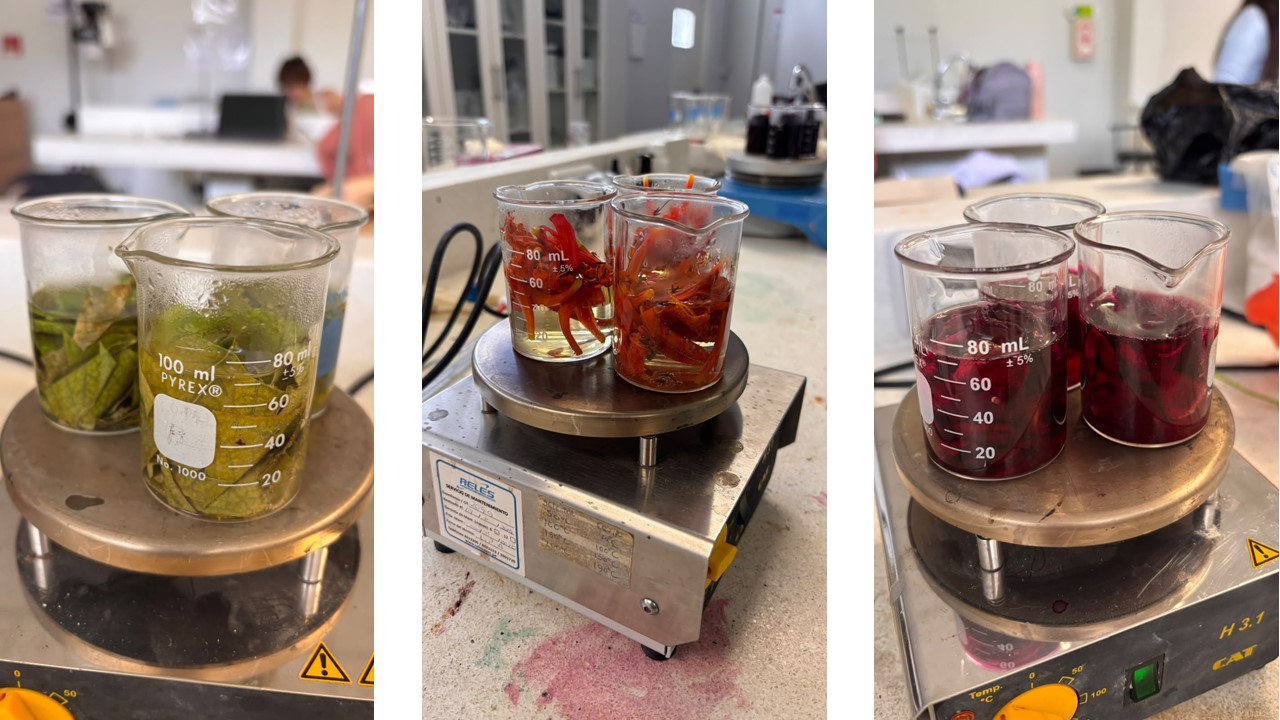
This gave us a total of seven different dye sources. Since we had three different mordants for each one, we ended up with a total of 21 different samples.
The process was similar to the first one. We prepared each dye bath and placed the samples separately. Each container corresponded to a different mordant. We left the samples in the bath for almost an hour, and then allowed them to cool until the following day, when we removed the fabrics and fibers.
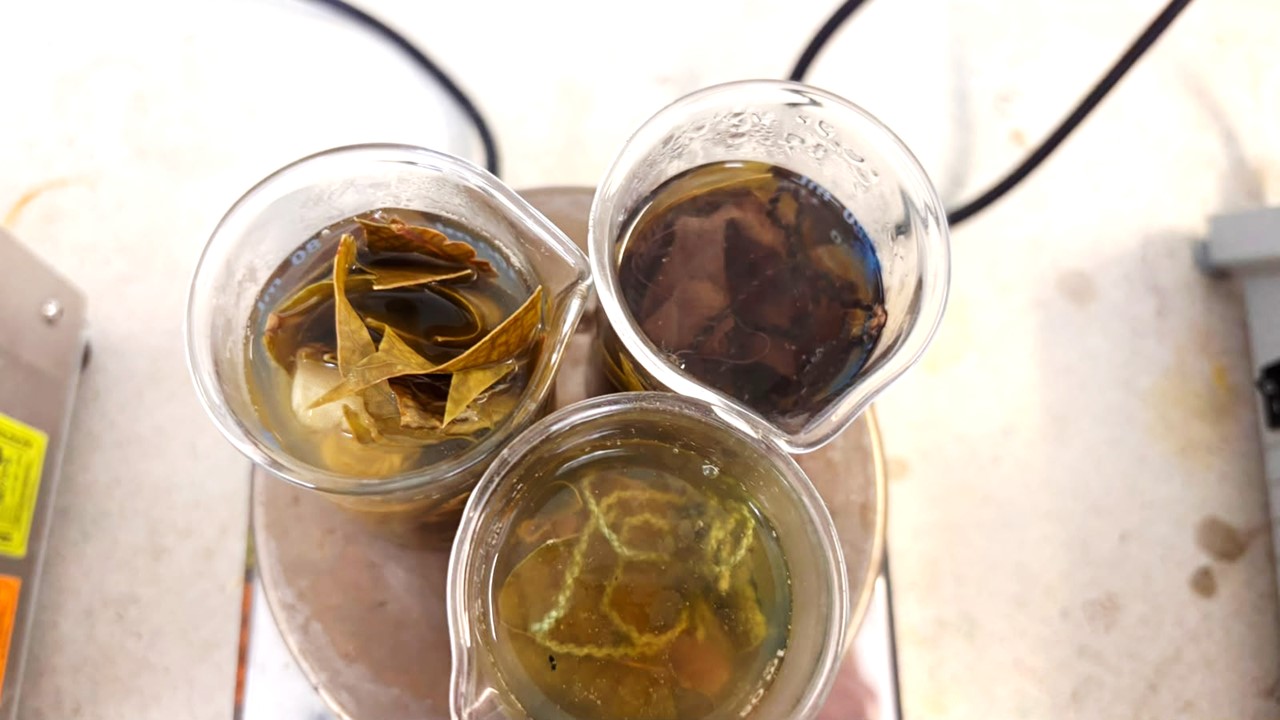
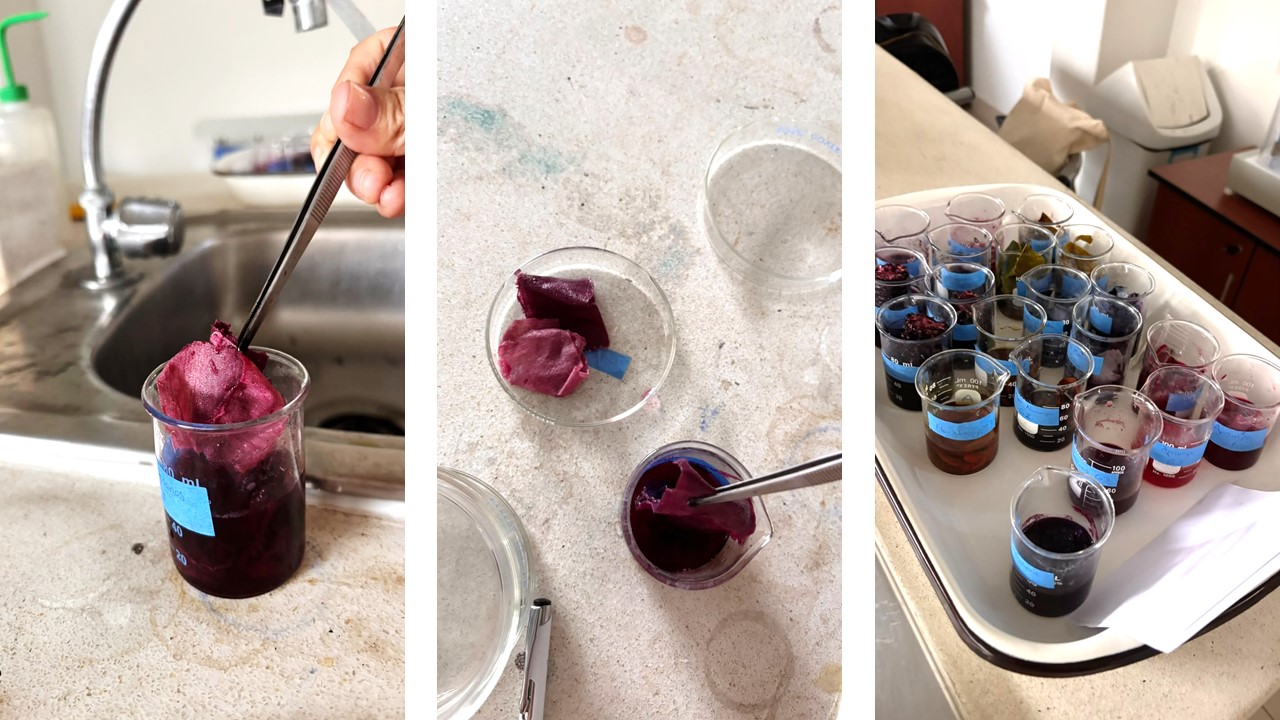
It is worth mentioning that we used relatively small containers because our samples were also quite small. However, it is still important to make sure that there is enough space for the fibers to move freely in the dye bath, so they don't become compressed or develop uneven areas during the dyeing process.
Results
As a result of this experimentation, we obtained 21 different colors.
In our case, we did not use any modifiers in this second stage. However, it is worth mentioning that the literature and the references we consulted also describe the use of different modifiers. For example, lemon juice, citric acid, and cream of tartar can alter the color. They can make it more saturated or brighter, or they can also darken it.
We obtained a wide range of samples, and each one varied quite significantly depending on the mordant that was used.
In general, we could clearly see how the iron-based mordant, in this case ferrous sulfate, darkened the samples. In almost every case, the samples came out with a noticeably darker tone. With cochineal, the resulting color was almost brown, a medium grayish-brown, almost black, actually. With eucalyptus, we also obtained more brownish tones.
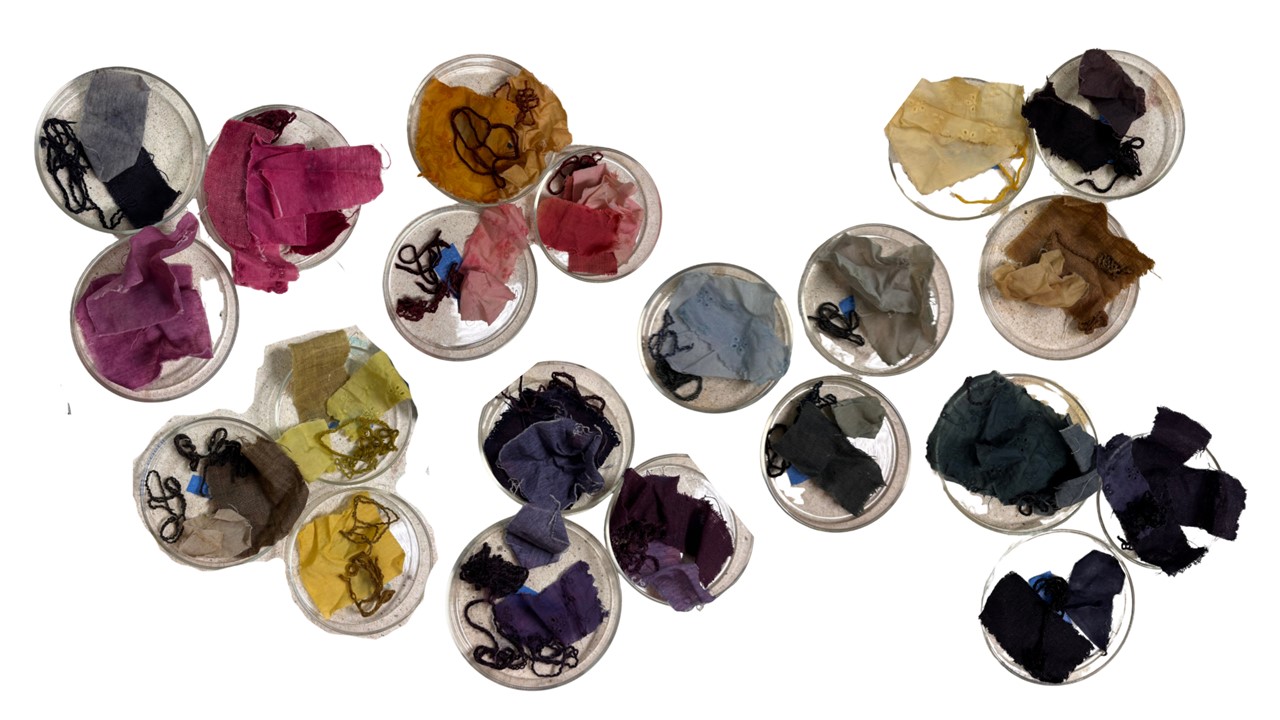
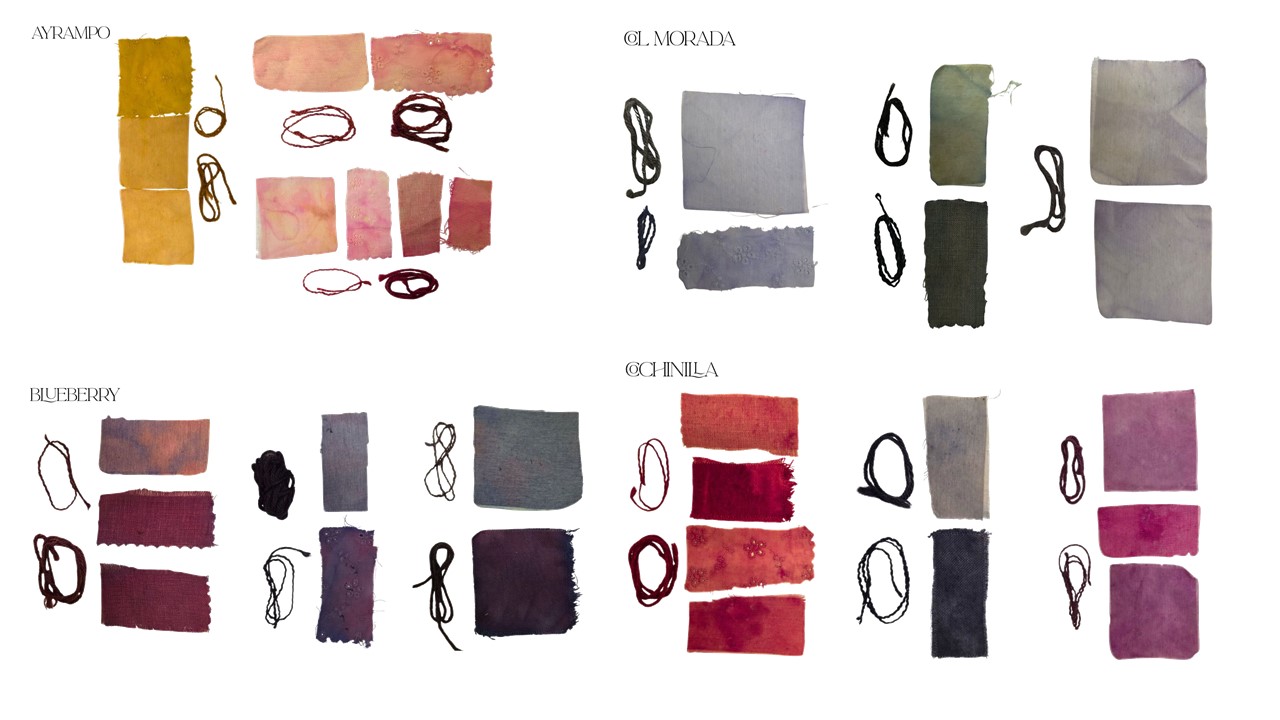
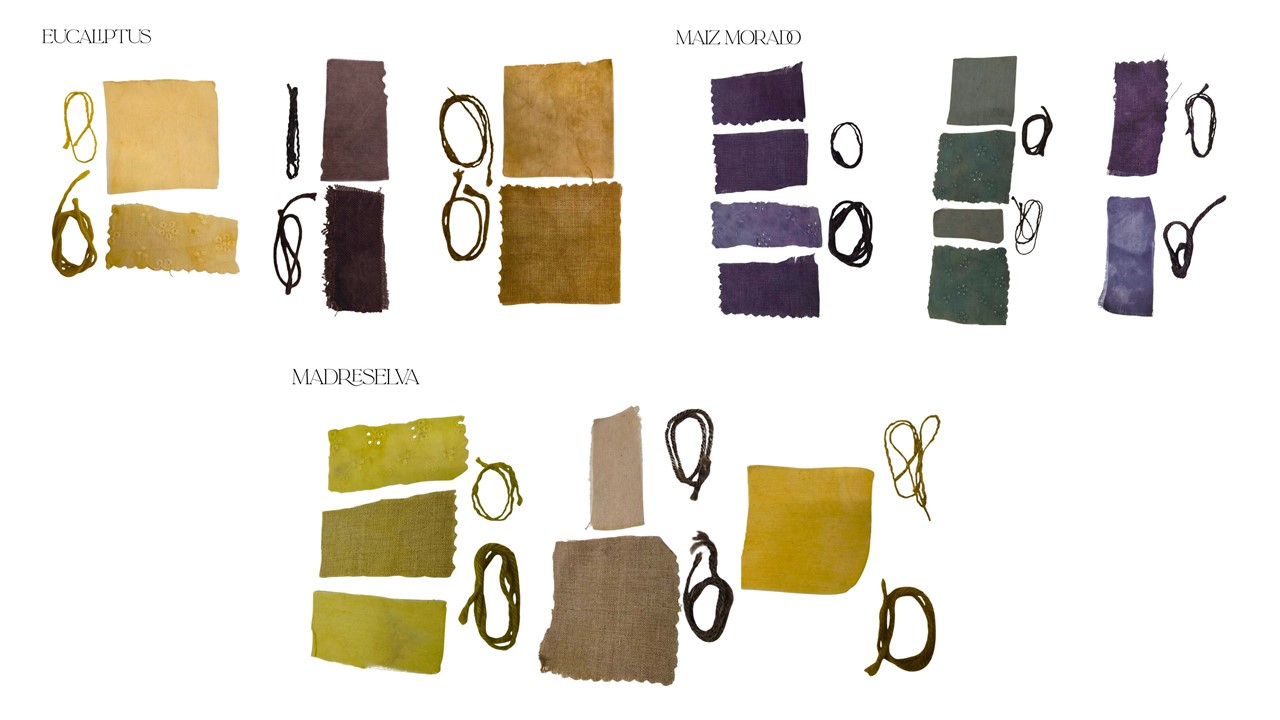
On the other hand, the alum really enhanced the color. Across the samples, alum produced much more saturated and vibrant colors. With the madreselva, we obtained a green, almost lime-green color. Cochineal also produced more reddish and fuchsia tones.
Inks
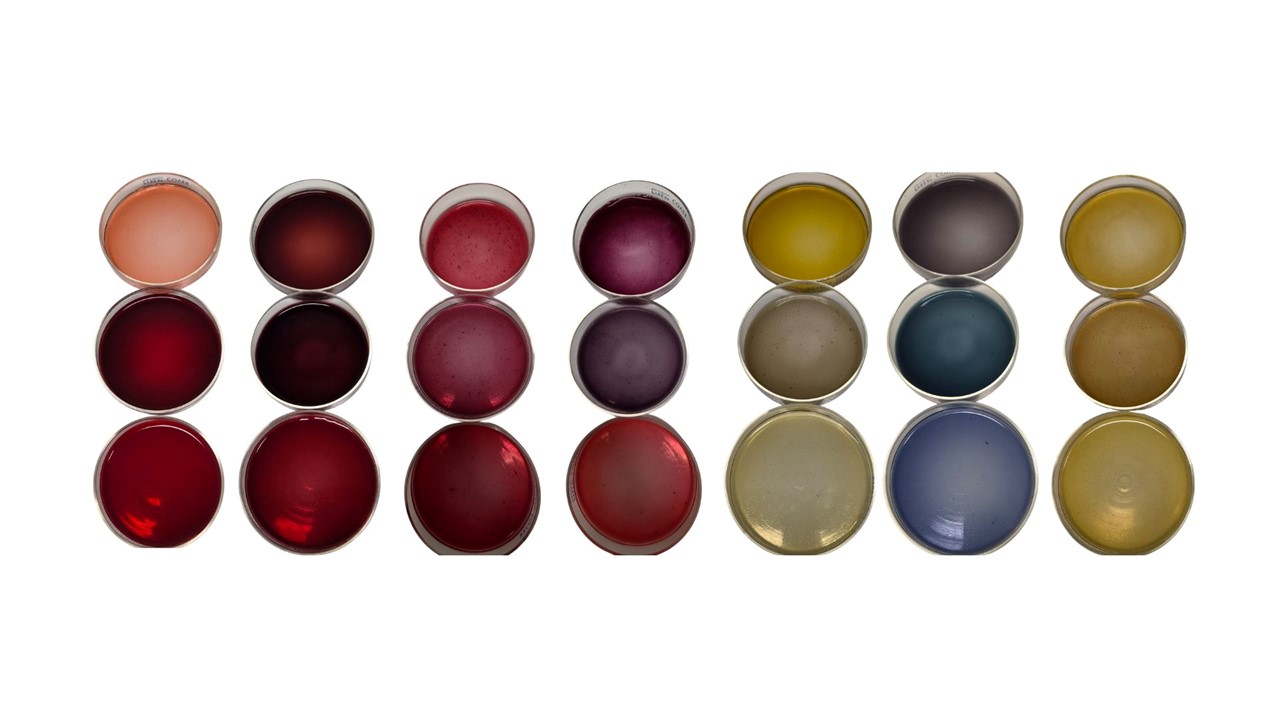
After this, we also extracted some inks from the different dye baths we had already prepared, as a way of making use of all the natural materials we had collected.
Weekly reflection & critical
There are different techniques and formulations that can be used for natural dyeing. So, especially in this type of practice, documentation is very important, because it allows you to make changes more consciously—for example, in terms of the amount of materials you use and how these can affect the final result.
It is also important to document which materials are being used for dyeing, especially when working with less common species or wild plants whose dyeing properties may not be well documented.
Keeping an organized record is also very useful. In our case, doing these two trials allowed us to better understand how the different mixtures and the interaction between the elements affected the results.
The results from the second trial were much clearer than those from the first one. In the first attempt, we also obtained different results, but I think that the ferrous sulfate probably migrated into the other dye baths and ended up darkening the colors even further.
Another interesting finding was that the color also varies depending on the type of fabric or fiber. The protein-based fibers—in our case, we had one that was pure, the silk, and another one that was a blend—showed a much more saturated coloration. It seemed like the color penetrated the fibers more deeply.
Perhaps this is one of the reasons why protein-based fibers, such as wool, are so commonly used for natural dyeing.
So, one of the main reflections we took from this experiment is that we would like to continue exploring. It made us curious to work with more materials and discover the different natural resources available in our local area that could provide this kind of added value.
At the same time, it is important to make sure that these species are not harvested intensively, and to keep the cultural traditions and knowledge surrounding natural dyeing alive.